
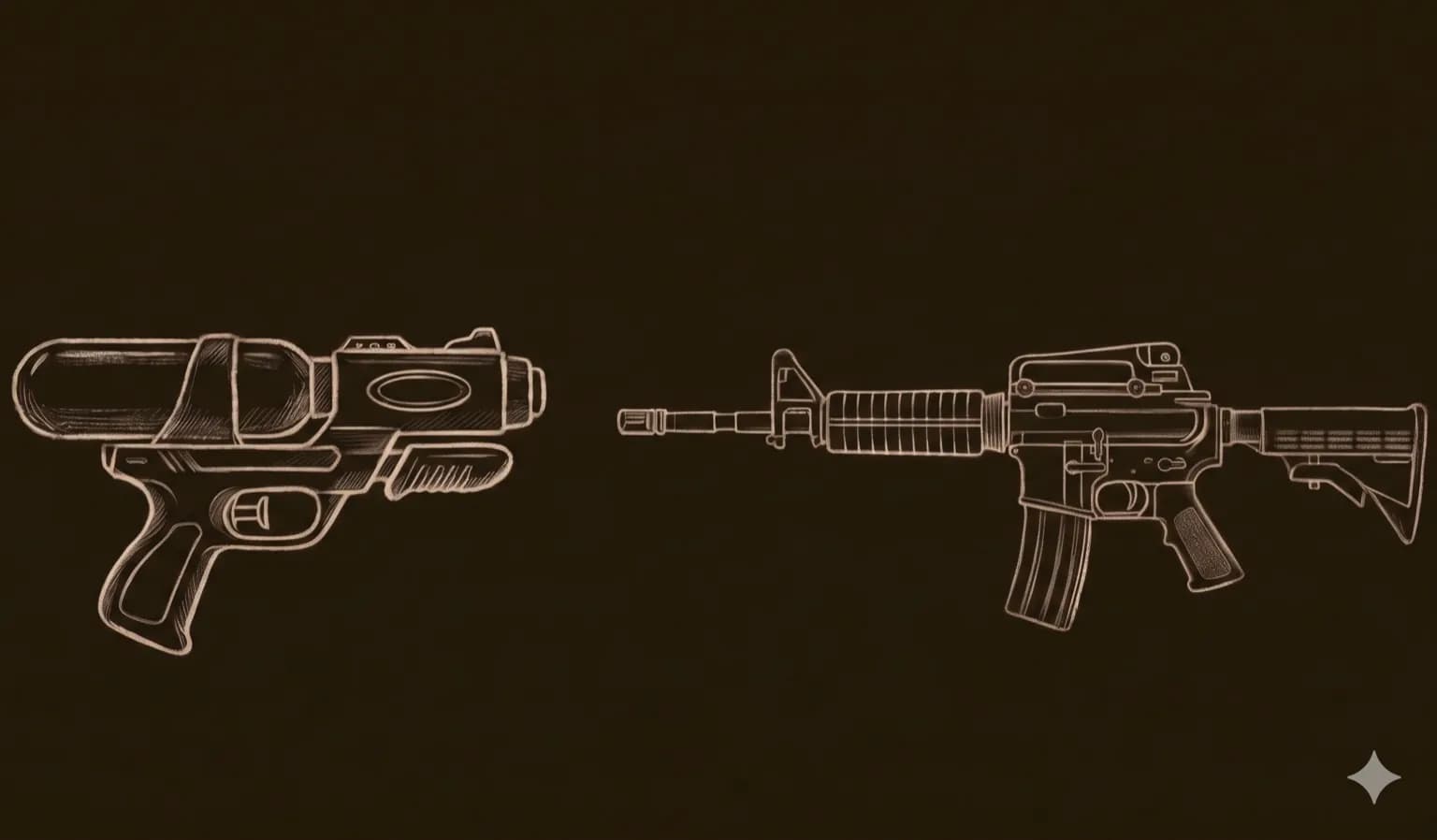
There's a popular comparison that paints the retail trader as a school team player thrown onto the field with Olympic champions. Imagine competing with those you can never outsmart or outspend. Daunting, huh?
But we believe this analogy is flawed — it implies that being on the same field means playing the same game. Nothing could be further from the truth. Institutions have size, mandates, and constraints; retail traders have none of those. They answer only to themselves and decide when their session starts and ends.
Imagine the luxury: you don't have to be active every day, don't need to move large capital, and can step aside at will. You can be in and out of positions with the click of a button — all while shitposting on X. Your game is whatever you choose it to be, with a level of complexity that matches your personality.
So, what should my game be?
Most retail traders don't lose because the opposition is too strong. They lose because they operate without structure. Winning starts with a shift from prediction to process. You don't need a perfect strategy — a repeatable one will do. At minimum, that means:
- Clear entry conditions you can recognize without hesitation;
- Predefined risk (where you're wrong) and reward (what makes the trade worth it);
- A sufficient sample size to know it actually works.
Risk control is where most outcomes are decided. The traders who last are the ones who make sure no single mistake matters. In practice, that looks like:
- Small, fixed risk per trade;
- No size increases driven by emotions after losses;
- Hard limits on how much you can lose in a day or week.
The game of YOU vs YOU
With some experience, you'll see that execution is the quiet separator. Many traders know what to do but don't do it consistently. Following your plan after a losing streak, letting trades play out, and accepting missed moves — that's where edge turns into results.
Strong retail traders do these things well:
- Recognize when their setup fits the market;
- Sit out when it doesn't;
- Treat "no trade" as a valid outcome.
Easier said than done, huh? But without proper execution, your edge is worth about as much as a 15y/o influencer's YouTube video about a "perfect strategy."
So, welcome to the Olympic Games — where you don't care about the champions. You're playing small-sided games on the edge of the field, choosing when to step in, which situations to engage, and how much to risk.
The only other player playing the exact same game as you is another version of you — the impatient you, the undisciplined you, the scared you. That's the only opponent you have to beat to win.